Looking out my back window, I see a rainbow ending roughly where Inchicore railway works is.

The only pot of gold there is the site value when CIE Property get to demolish it and sell the site off for housing.
Looking out my back window, I see a rainbow ending roughly where Inchicore railway works is.
The only pot of gold there is the site value when CIE Property get to demolish it and sell the site off for housing.
For the last 15 months or so of this new abnormal, I have been wondering whether or not to bother continuing with this site, but have recently decided to do so.
As part of the process for relaunching the site, I am checking various sections of the site outside of WordPress prior to reloading the entire site to my webhost. This includes checking links to external sites and one of these was to the Dundalk Museum.
For the uninitiated, this is located in a former tobacco warehouse and its primary focus is industrial heritage. Upon following the link to the site, the following message is displayed:
The Dundalk Museum website has been taken down.
If you have any queries, please contact Brian Walsh – Brian.Walsh@louthcoco.ie
In an era where government is throwing money (that it doesn’t have) at anything that moves and one where overseas travel is actively discouraged, the removal of a website dedicated to a tourist attraction in the Republic of Ireland is inappropriate and a false economy.
industrialheritageireland.info calls on Louth County Council to reinstate this website immediately. I wont even blink if they claim that doing so would be to “build back better”.
I will declare a conflict of interest here – I don’t believe that COVID19 is anything more than a bad flu season and mask wearing is virtue signalling.
The question does arise though, in the case of those reported to Irish Rail for doing lines of cocaine off train tables, were they wearing masks?
The Irish Independent reports that a dig is to take place in St. Anne’s Park, Raheny, at the site of the former mansion, to determine what remains beneath the earthen mounds covering same.
St. Anne’s was the country residence of Lord Ardilaun of the Guinness family.
Spain has the Caminito Del Rey, Switzerland has the Torrent Neuf.
The latter is a 15th Century, suspended water leat system which was used to divert water from glaciers to otherwise dry valleys. Per the BBC, some 200 such systems spanning 1,800km in length still operate. One such systems is the Torrent Neuf. Initially put out of service in 1935, it was restored in 2013 as a tourist attraction.
Dublin People reports on the unveiling of a new plaque on the outer wall of the Diageo complex on Victoria Quay, Dublin, commemorating the Guinness barges which previously operated between the quay and Dublin port.
The previous plaque was stolen many years ago – hopefully, this one will survive.
Update 18th August 2021 – photo of the new plaque:

Not in Ireland (but I am genuinely surprised that CIE haven’t tried this as an excuse).
Thankfully, the local council have stepped in and demanded that they apply for retrospective planning permission (I hope that this is to allow the council to refuse such permission).
Located at the southern end of Co. Antrim, close to the Lagan Navigation, the station at Moira was an attractive one, with the original station building on the Up side (the oldest original railway building on the island of Ireland), the former signal cabin preserved at the Belfast end of the station (albeit not on its original site) and an original GNR(I) style waiting shelter on the Down side.
Separately, the DOE(NI) had a storage base on the Dublin side of the station. This makes you wonder how this monstrosity slipped through the planning process:
This one passed me by when first announced – possibly because I reckoned it would come to nothing.
However, per the Irish Independent, it looks like a Velorail project (basically a bike on rails) may come into existence on the disused railways around Claremorris.
In 1917, due to coastal erosion, the railway line between Bray and Greystones was deviated inland for the final time (for the moment!) with the construction of Bray Head No. 4 Tunnel. This commenced almost immediately south of Bray Head No. 3 Tunnel and replaced a long section from there to just north of the harbour at Greystones. Part of this route had already been deviated in 1888 – the remains of which can be seen on GoogleMaps:
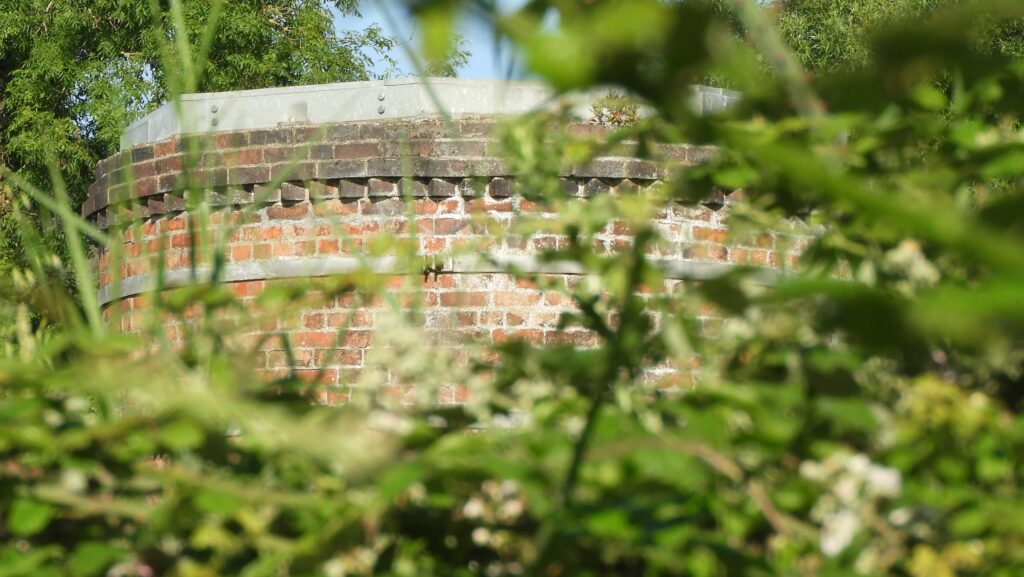
At 1,084 yards long, this is the second longest railway tunnel in use in Ireland and just north of the south portal, there is an air vent.
Very few photos of this exist and I am not surprised. It is located on private land and is not accessible from nearby roads nor the Bray Head cliff path.
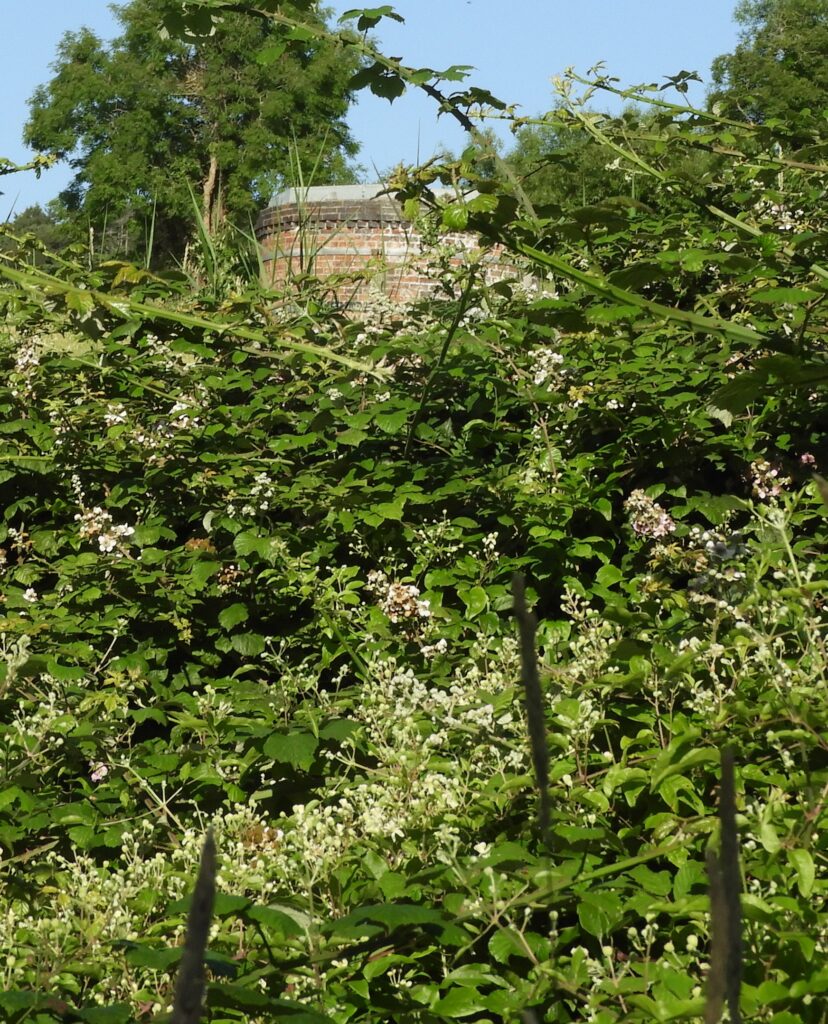
I went out to Greystones today to see how close I could get and the photos below are the best I could achieve: